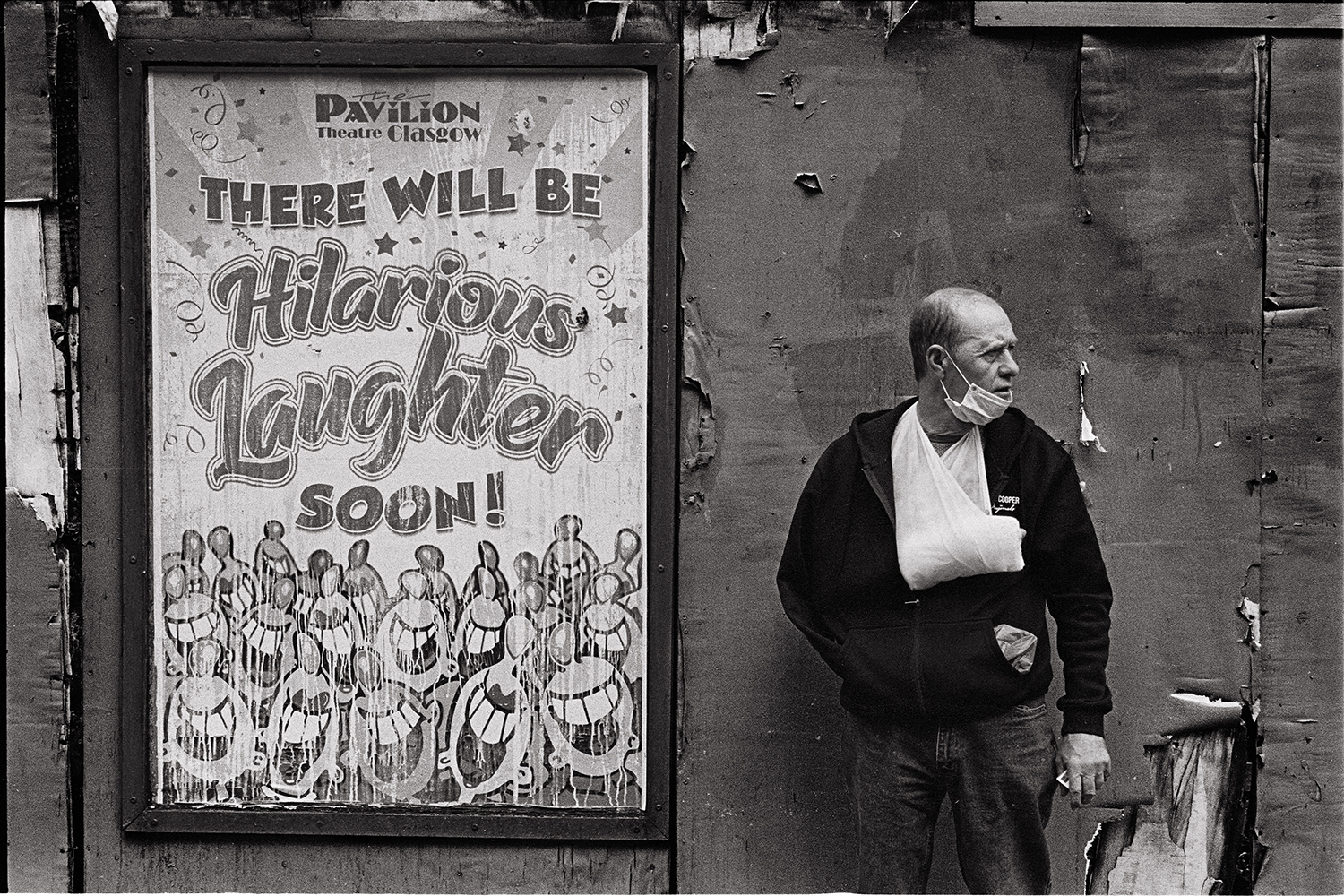
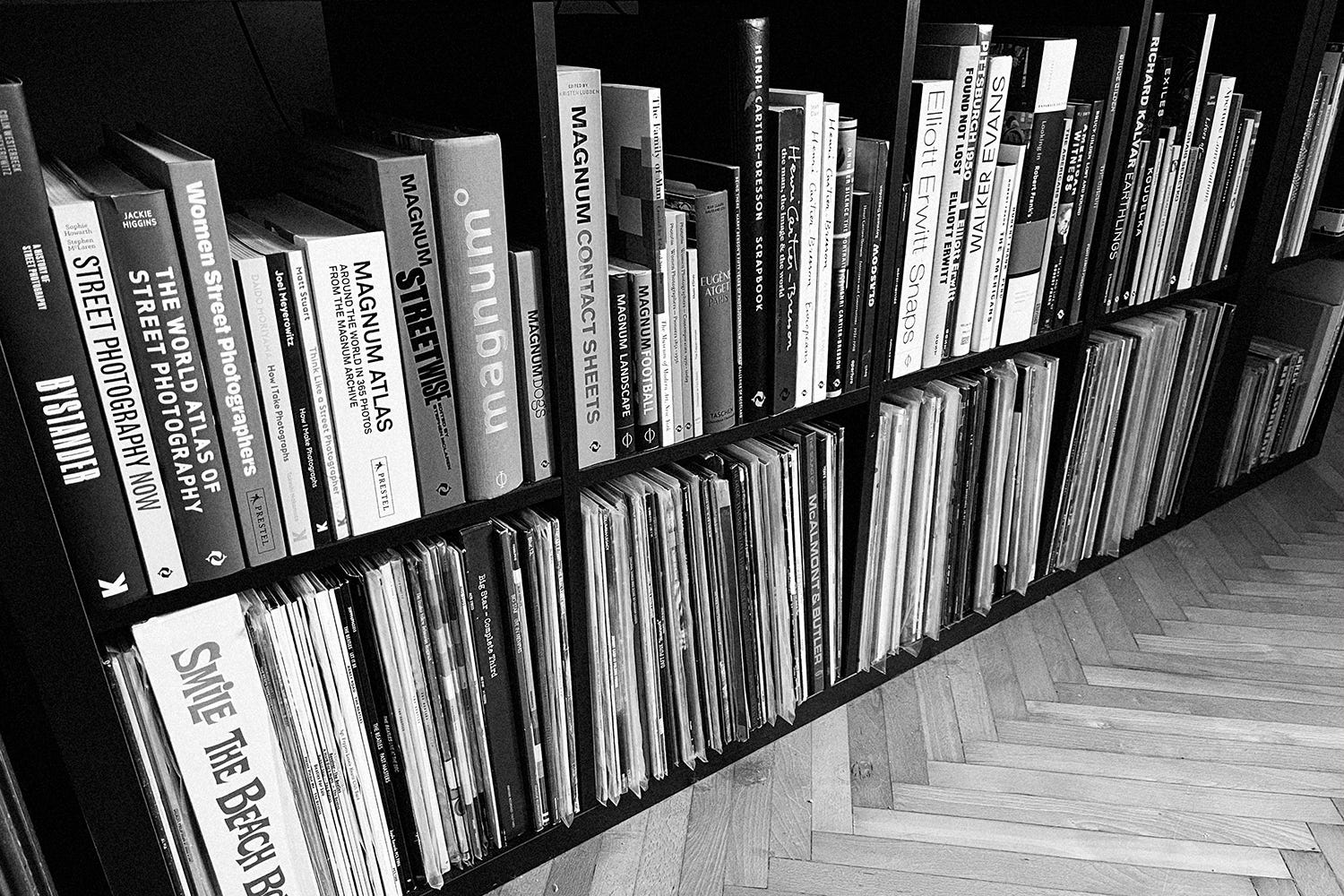
This slightly edited post was first published on the Substack newsletter, Photos, mostly on May 31st, 2023.
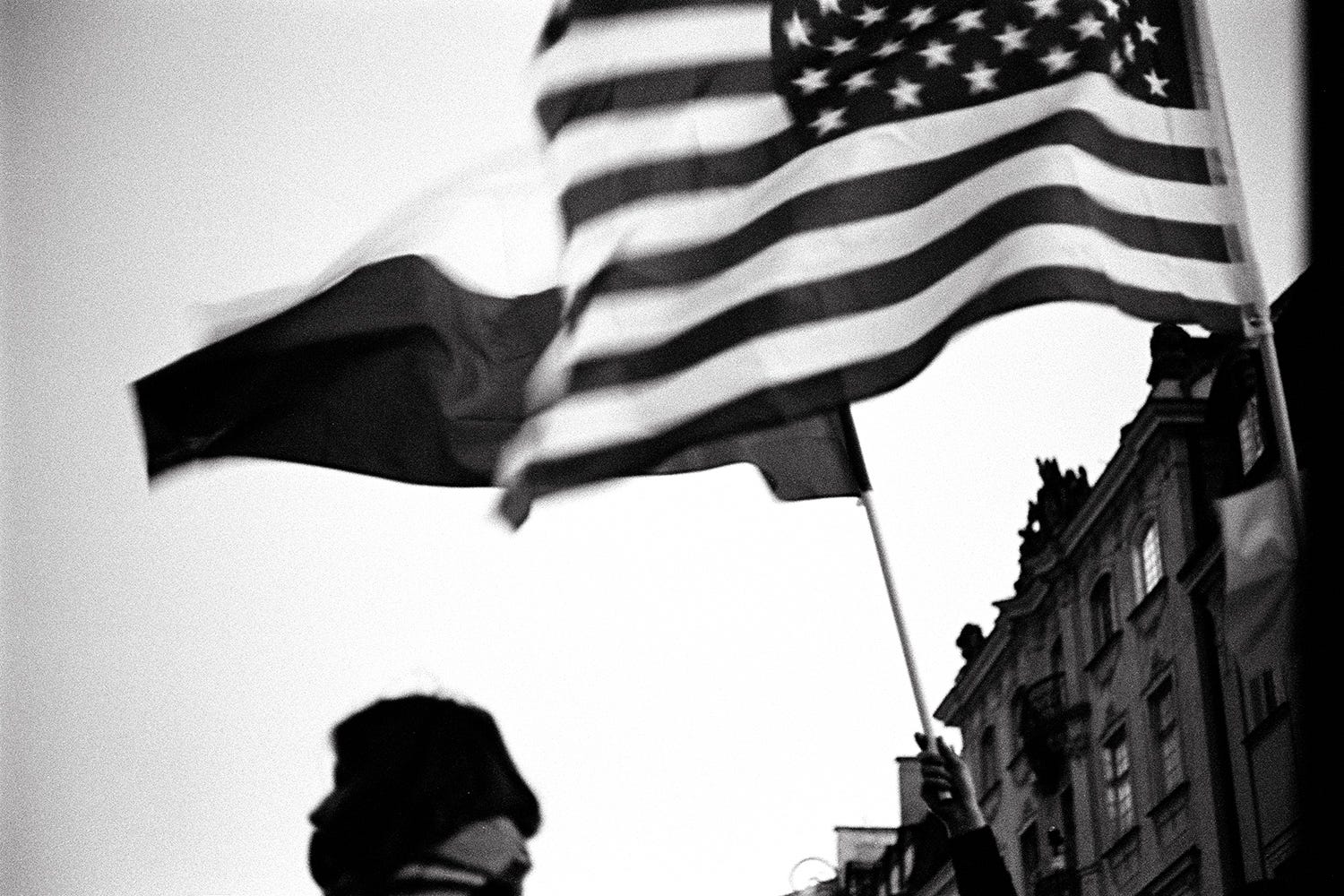
Black and white are the colors of photography. They symbolize the alternatives of hope and despair to which mankind is forever subjected. – Robert Frank
In Robert Frank’s The Americans, plate 13 is a photograph of an African-American nanny, standing before a grey-white wall, with a white baby resting in her arms. Literally, surrounded by whiteness. Taken in 1955 in Charleston, South Carolina, this was years before the civil rights movement had made any significant progress in the South, and this photograph makes a stark, clear-headed statement of the time. Mary Ellen Mark said of the photograph that it captures the essence of racism and servitude in America for all time. The picture would have been powerful in colour on Kodachrome, but the photographer’s decision to shoot it on Kodak’s panchromatic Plus-X black-and-white film elevated it into something truly special. Frank’s collection of photographs, following in the street-stalking footsteps of Walker Evans and Henri Cartier-Bresson, would irrevocably change street photography and, for many, stamp it with a signature black-and-white style through to the present day.
Following the Continuum
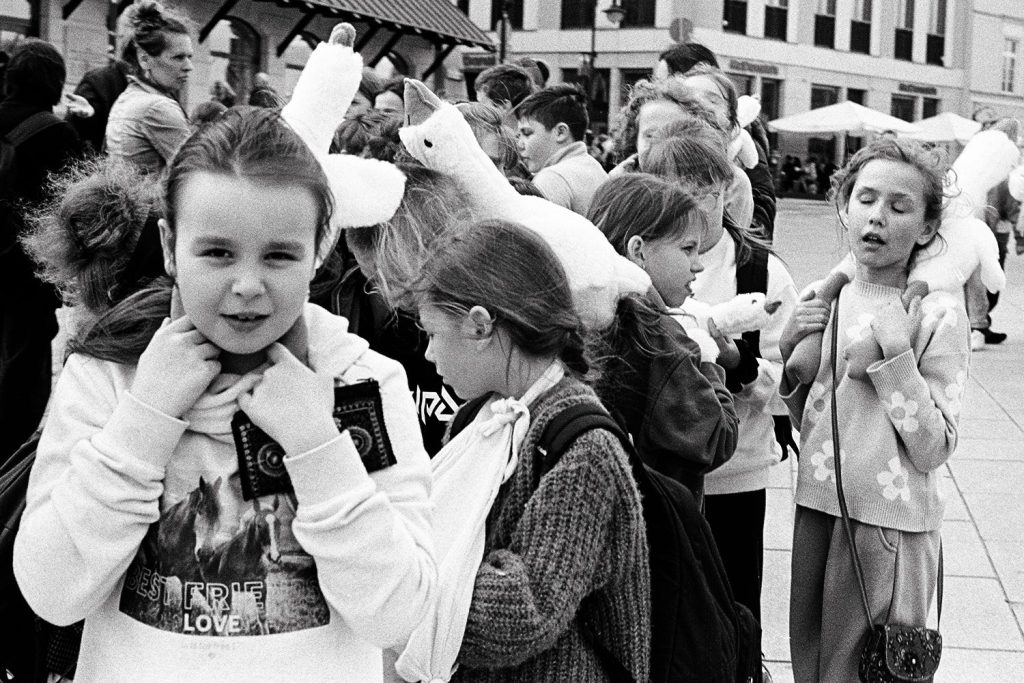
From the early 20th century days of Eugène Atget pacing around a modernising Paris, through to Cartier-Bresson hunting for photographs of life in 1930s Mexico, black and white film was the photographer’s only option. Kodak’s revolutionary Kodachrome colour film launched in 1935, however, it was complex and time-consuming to develop and print. The first wave of photojournalists given freedom to roam by Oskar Barnack’s 35mm Leica cameras preferred film that could be developed quickly, consistently, and with a wide latitude of water temperatures depending on where in the world they found themselves. Sticking with the dependable black-and-white films would have been an easy decision.
With many detractors dismissing it as a fad or an option only for the amateur snapshot, the art world took decades to embrace colour film. Though William Eggleston was then making his switch from black and white to make some quite exceptional street photographs in colour – laying the path for Meyerowitz, Parr, Shore, et al – by the mid-1960s street photography, had historically, characteristically, become known by its timeless monochrome.
Today, street photography serves neither one nor the other. It is, of course, a personal preference. Great photographers work in both colour and black and white. Those who choose black and white, however, often position themselves within a continuum stretching back to Atget and Kertész, indirectly referencing or emulating the masters. That is not to say colour photographers are not also part of that lineage. Ironically, it’s not black and white.
The Surreality of Light and Shadow
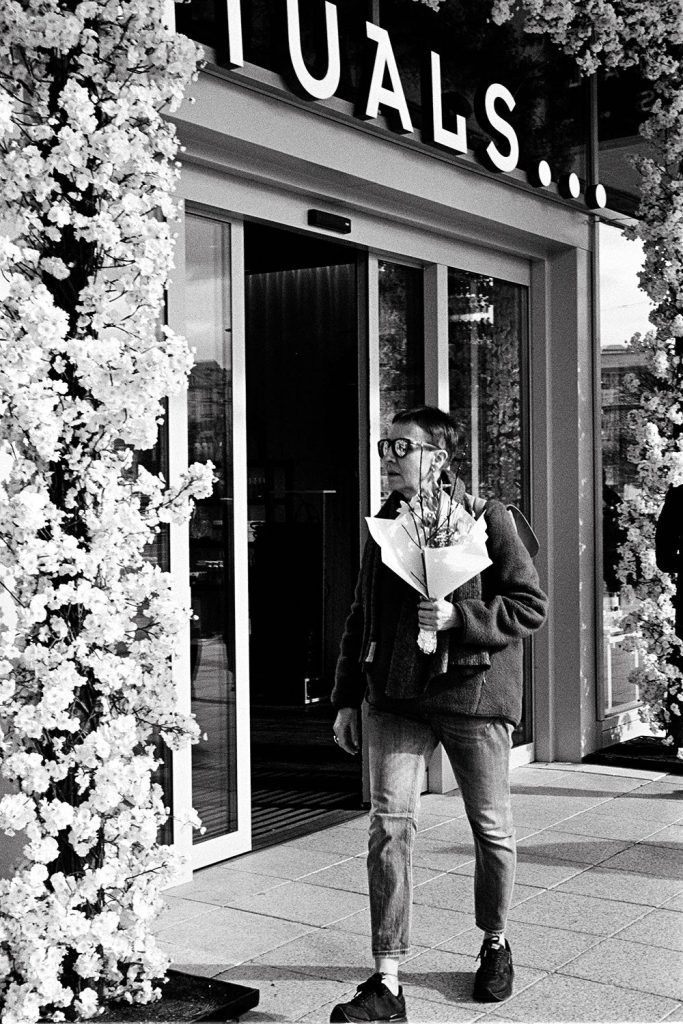
Black and white offers a further degree of abstraction. [It] made the overall impression more dreamlike. – Richard Kalvar
In Bruce Gilden’s photo of a Japanese man, lying back, eyes closed, he has dark liquid oozing from his head. Is this an autopsy or a crime scene? The gentleman, in fact, is having his hair coloured. At its core, making photography in black and white is an abstraction. A distillation of reality to an otherworldly surreality of light and shadow.
When asked, viewers of street photography will often cite the timelessness of a black-and-white photograph as an attraction. It is an easy shortcut to nostalgia. Meeting with a friend recently, we discussed our shared aim to make photographs that exist outside any obvious period. The agreement was that it was easy to ascertain an era with either colour or cars. Monochrome at least removes the colour from the equation.
Working in colour on the street is not easy. Masters such as the aforementioned Martin Parr, and Alex Webb, make it look easy but an abundance of terrible #streetphotography on social media disabuses one of that. In the street, scenes move fast and there is little to no control. Colours change in the daylight. Pastel clothes clash with Neon shop fronts. The colour wheel spins.
Well Organised Rectangle
Black and white street photography removes the distraction of colour, for viewer and photographer, and both can concentrate on form, with its inherent tone, texture, composition, and geometry. Richard Kalvar often talks of a well-organised rectangle, with all elements falling into place, and this organisation is heightened and illuminated in black and white. Without colour to concern, the photographer can concentrate on the interplay of light and dark in the scene. It is in recognising where the light is and how it affects the scene in front of the lens, with its shadows and its highlights, that engaging, exciting street photography can be made.
Black-and-white film can be pulled further than colour film, and doing so offers higher contrast, a characteristic much prized in some quarters of street photography. Daido Moriyama, Bruce Gilden, and Ed Van der Elsken used high-contrast black-and-white pictures to add mystery and heighten the drama of their work – at times pushing the contrast to the very limits of what might be considered acceptable, all in service of the resulting and captivating image.
In 1997, back in the pre-internet days when indie rock fans received promotional postcards from the fairytale land of Leamington Spa, I remember opening a package with a press photo of Idlewild – a high-contrast black-and-white print of the band with the classic, untidy black border that comes from the darkroom printing. That I think of that photograph so often makes me wonder if I was a black-and-white photographer before ever lifting a camera to my eye.
Street photography in black and white? It’s a personal choice, but is it yours? What do you prefer? Let me know in the comments.
And finally…
If you’ve enjoyed this issue, I’d be very grateful if you could recommend it to any photography-loving friends.
This newsletter is free to read, however, as a freelancer in the creative arts, every penny counts. If you like what I do, please consider buying me a roll of film. You can do so by clicking here, or by aiming your camera at the QR code below. Your donations help me keep making photographs and writing.

All labour required to publish The Contact Sheet is undertaken by me alone. As I try to be a better socialist, I donate 10% of all income to anti-capitalist, leftist, or progressive causes or organisations that help make the world a better place. Thank you!