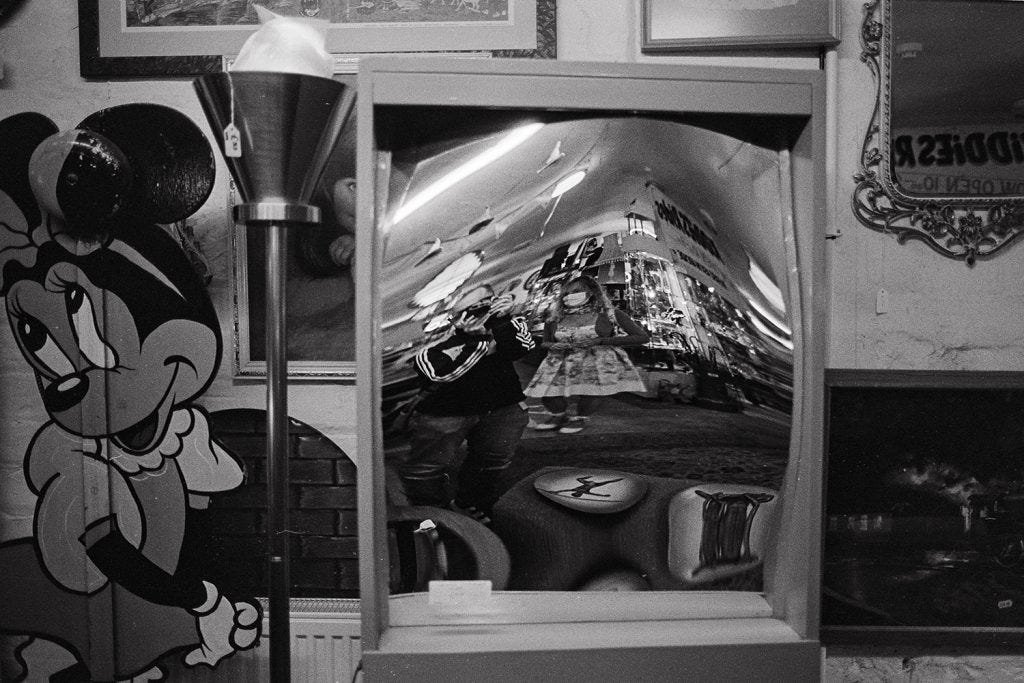
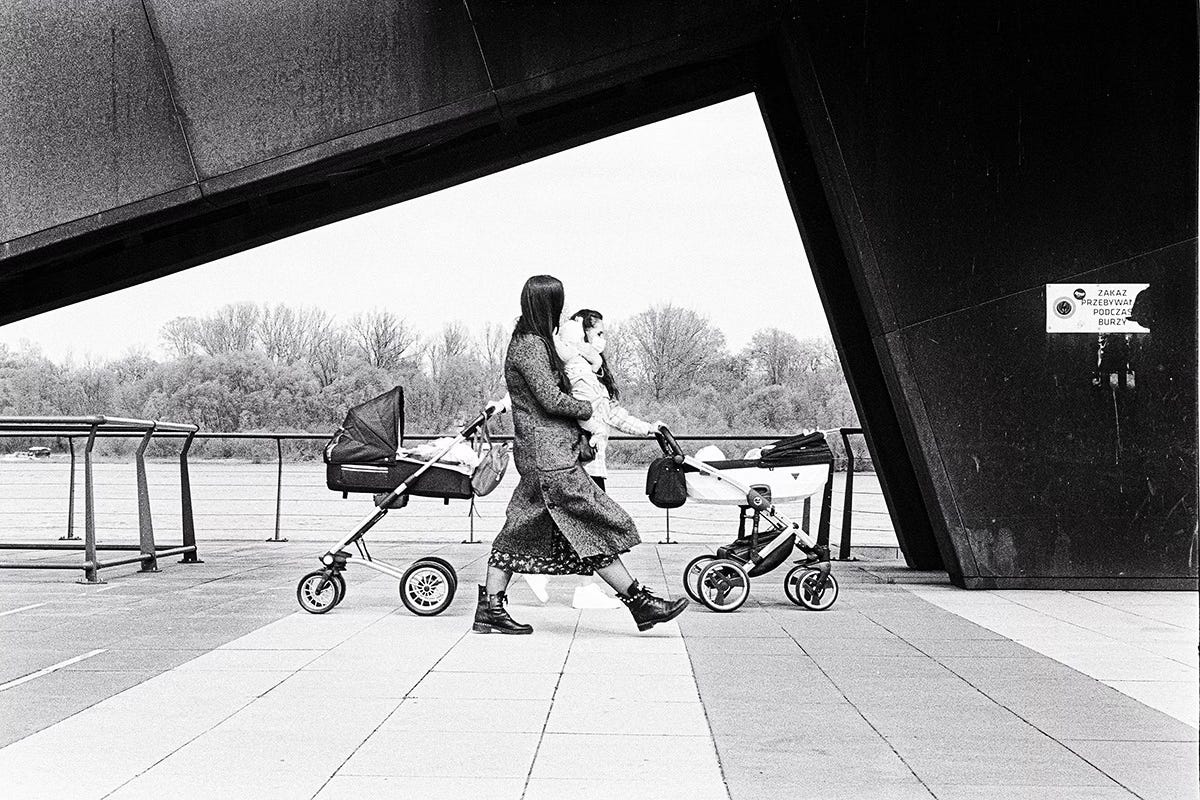
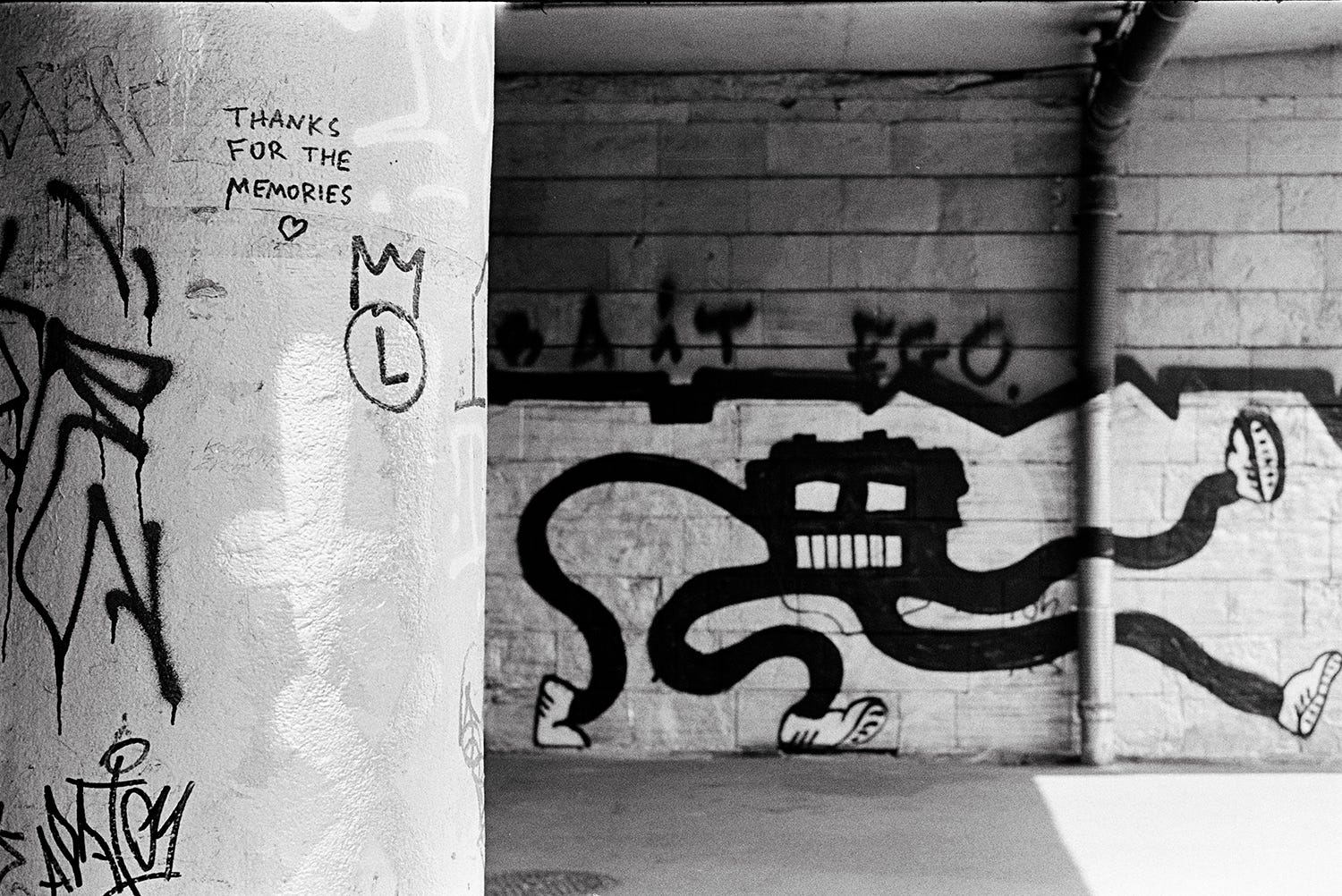
This slightly edited post was first published on the Substack newsletter, Photos, mostly on April 26th, 2023.
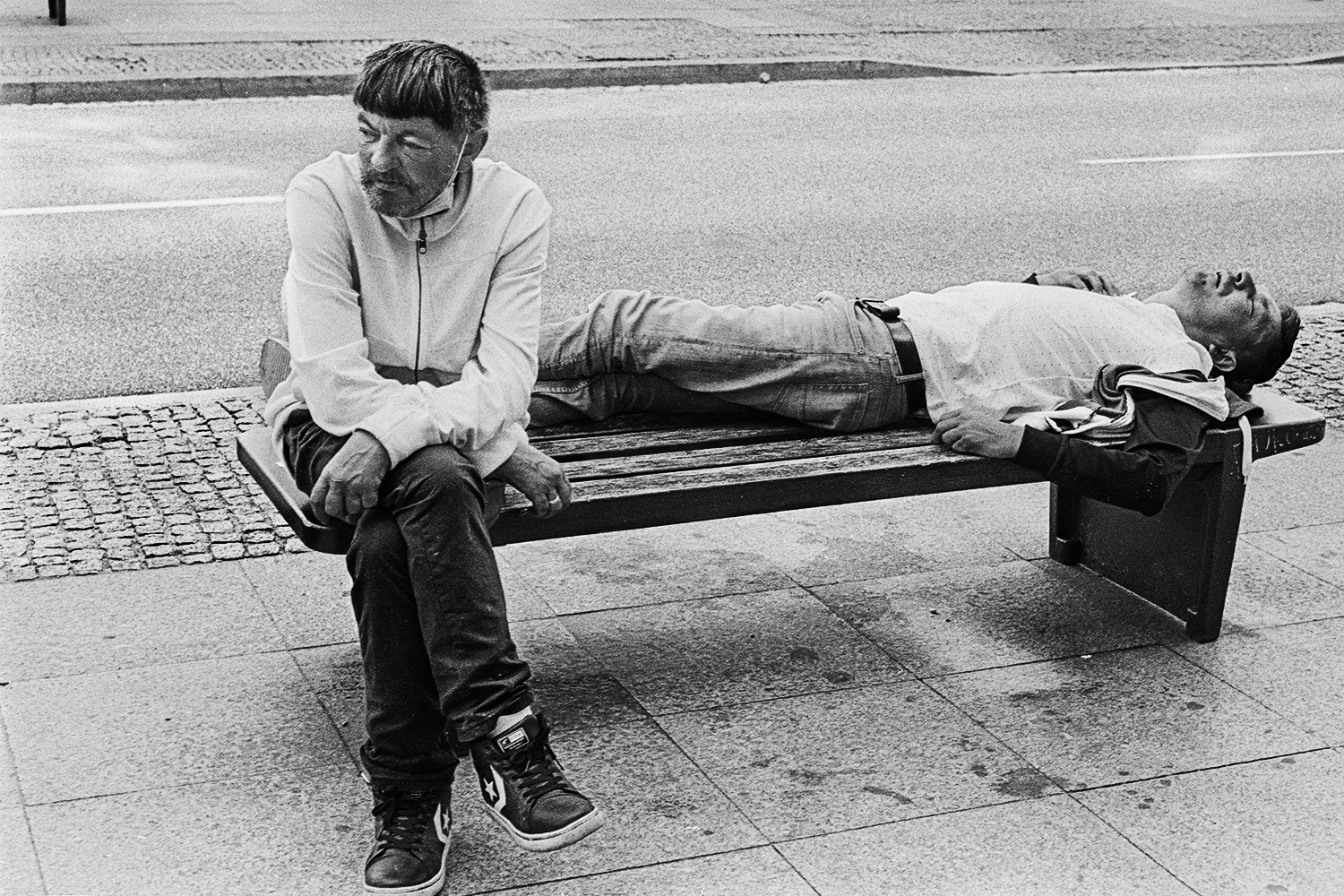
Having started in street photography using digital cameras over a decade before moving to film, I have generous experience in both. Since loading my first roll of Tri-X a few years ago, it continues to surprise me when a stranger, suspicious of me having taken their photograph, softens when they see an analogue camera in my hand. Maybe it is nostalgia for all things retro, deference to an inferred professional, or pity for an ageing hipster. Either way, the film camera around my wrist often takes the fire from the eyes of the aggressor and immunises me from accusations of nefarious deeds.
There is no doubt in my mind that setting aside the multitudinous menu options and automatic functions of digital cameras, to shoot with what is an expensive, albeit precisely engineered, light-proof box has made me a better street photographer with a gradually developing personal style and voice. There is so much to be said about shooting street photography on film, this month I thought I might consider what took me to film and what I’ve learned so far.
Embracing the Imperfections
Returning to photography after a lengthy hiatus, a move to film was part experiment, part curiosity, and part convenience. Neither my partner nor I owned a digital camera, yet when the pandemic led me back to photography, there were 2 film cameras gathering dust on a shelf. I had the choice of buying a digital camera and throwing Alien Skin’s Exposure Tri-X black-and-white emulation over every photograph, or enduring the learning curve and shooting with the real thing. While emulations get ever closer, there is no substitute for the palpable texture of film photography. Black and white film in particular, with its distinctive grain formed by the silver halide particles, can have a rough, seemingly tactile quality that is difficult to fake. When this gritty appearance meets the physical, tangible world and the people therein, something magical happens.
In comparison, digital photography can often seem too clean, too clinical, though free from the unintended consequences of a physical, chemical process. Pictures formed by silver salts, no matter how fine, will never be as sharp or as clear as a digital image. Rather than lamenting this, or regretting other small imperfections, shooting street photography on film has taught me to embrace it. In much the same way the subtle, faint crackle and pop of the needle on a vinyl record has a sense of warmth and nostalgia, the visual character of a film photograph can have an emotional impact that is difficult to deny, or indeed describe.
Emulation station
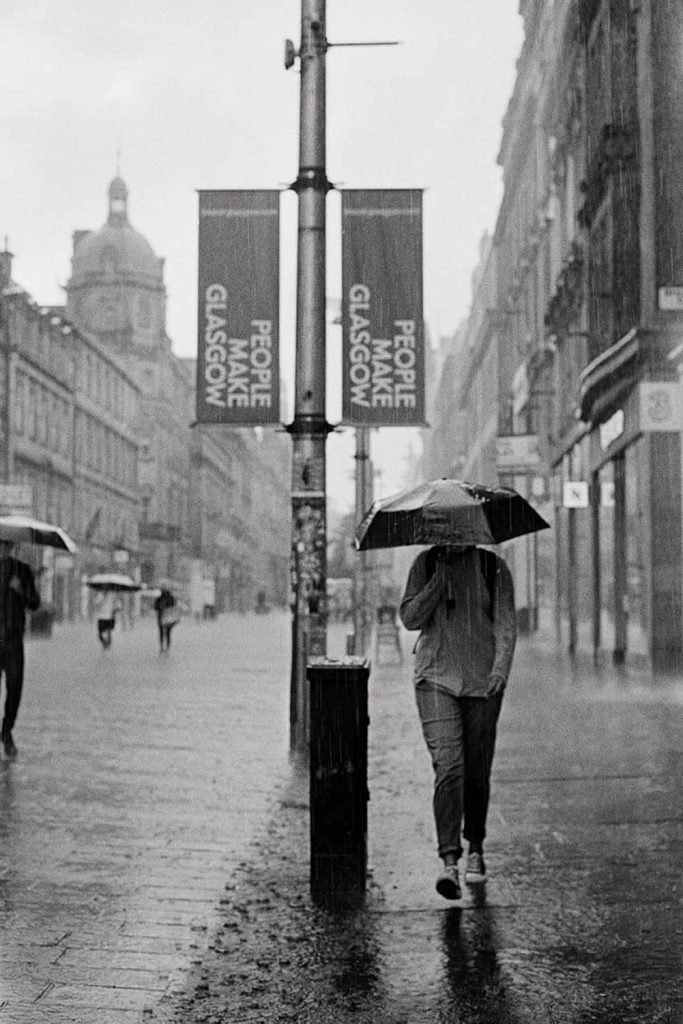
Modern emulations and overlays are useful tools – I still use Exposure to this day, however, looking through my own photographs, comparing something from a Leica M8 in 2008, with a photo from my Leica M3 and Tri-X developed in D76 in 2023, demonstrates a stark difference in atmosphere. A recent exhibition of colour photographs of Warsaw over the last 30-odd years showed a similar difference between early digital photos and the characteristic emulsions of Kodak Gold or Ektar. Some may disagree, but there is an argument to be made that there is no true substitute for photographing the street with the real thing.
The Learning Curve
A first moment of culture shock moving from digital photography to shooting on film is often the unpleasant discovery most of us will have of our over-reliance on the LCD screen. How on earth can I move on before I know I’ve got it? Fortunately, this dependence disappears quickly though, like an unwelcome house guest, the second-guessing pops back occasionally for a quick visit.
For others, the revelation of how quickly one can burn through a roll of 36 frames – and disposable income – is the first step up the learning curve. The limited exposures on an ever-increasingly expensive roll of film should be some motivation to slow down and be more deliberate. Switch off that burst mode. Nevertheless, street photography is all failure until success. Every shot counts, but only in so much as the failures are not a waste of film, but necessary steps laying the ground for the keepers.
Until last year, every camera I had ever used had a light meter. Now and then, I may have ignored it, trusting instead a handheld meter, however, it was always there should I need it. Exactly a year ago, I bought the meterless Leica M3 and continued up the learning curve, relying on occasional glances at the handheld until eventually, the Sunny 16 rule was all I needed out on the street. The lack of autofocus on many analogue cameras can also often trip some new converts to film, however, it soon becomes second nature, as does full manual control.
Manual Control
Even in my digital Leica M days, to give me one thing less to worry about in a day’s photography, I would lean heavily on aperture priority or shutter speed priority modes. there’s nothing wrong with that, of course, however, I only became truly comfortable with exposure and the law of reciprocity when I was forced to consider everything with full manual exposure control of my analogue cameras. In the cut and thrust of the street, there is little time to set an aperture, reciprocate with a shutter speed, manually focus, compose, and snap. The moment is long gone. Instead, with manual exposure came figurative tools such as zone-focusing and the aforementioned Sunny 16 rule, all of which made me a better, more technical, photographer able to quickly react to what I find.
What do you think? Have you moved from digital to film? What was your experience? Or are you planning to? What questions do you have? Let me know in the comments.
And finally…
If you’ve enjoyed this issue, I’d be very grateful if you could recommend it to any photography-loving friends.
This newsletter is free to read, however, as a freelancer in the creative arts, every penny counts. If you like what I do, please consider buying me a roll of film. You can do so by clicking here, or by aiming your camera at the QR code below. Your donations help me keep making photographs and writing.

All labour required to publish The Contact Sheet is undertaken by me alone. As I try to be a better socialist, I donate 10% of all income to anti-capitalist, leftist, or progressive causes or organisations that help make the world a better place. Thank you!