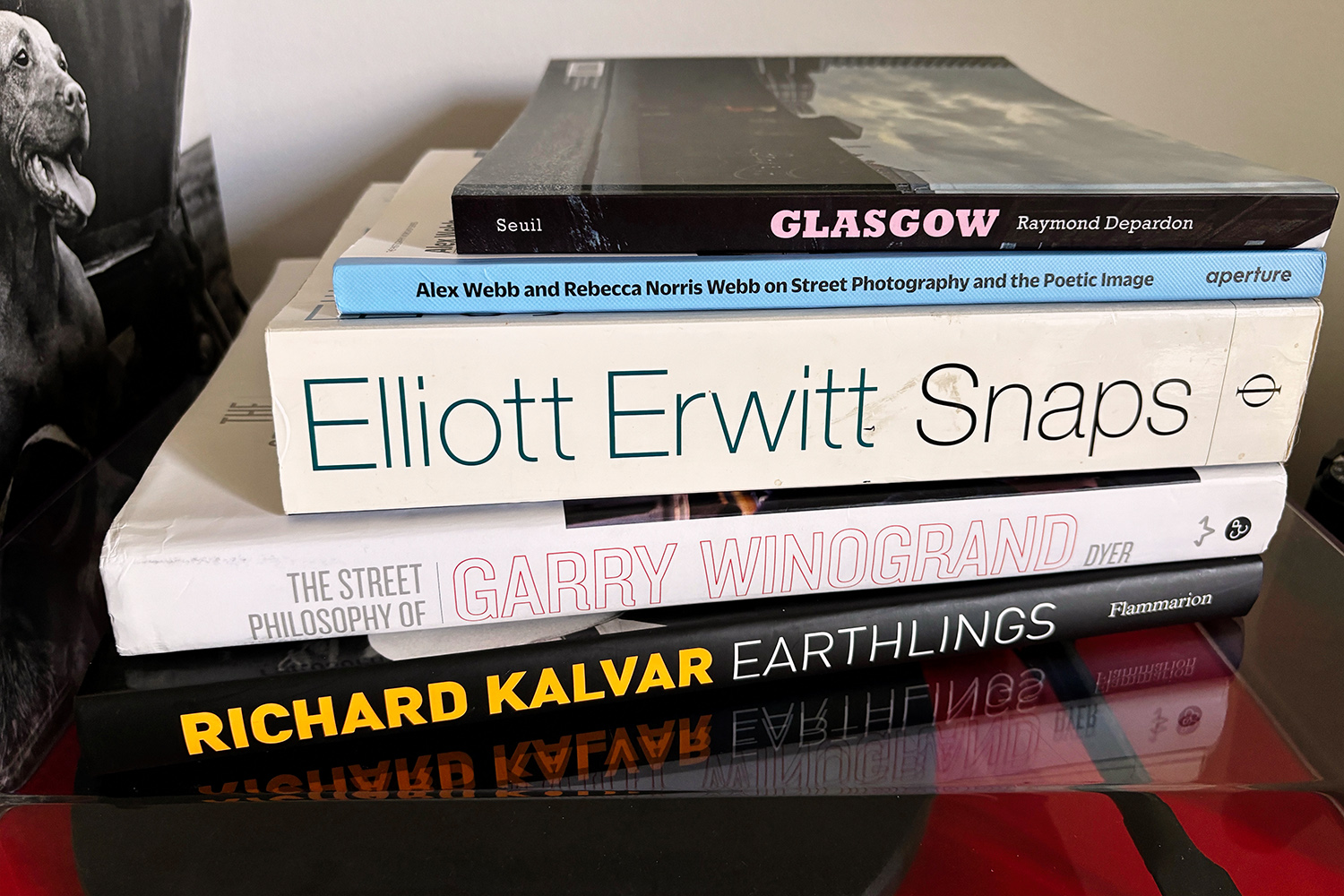
This slightly edited post was first published on the Substack newsletter, Photos, mostly on February 22nd, 2023.
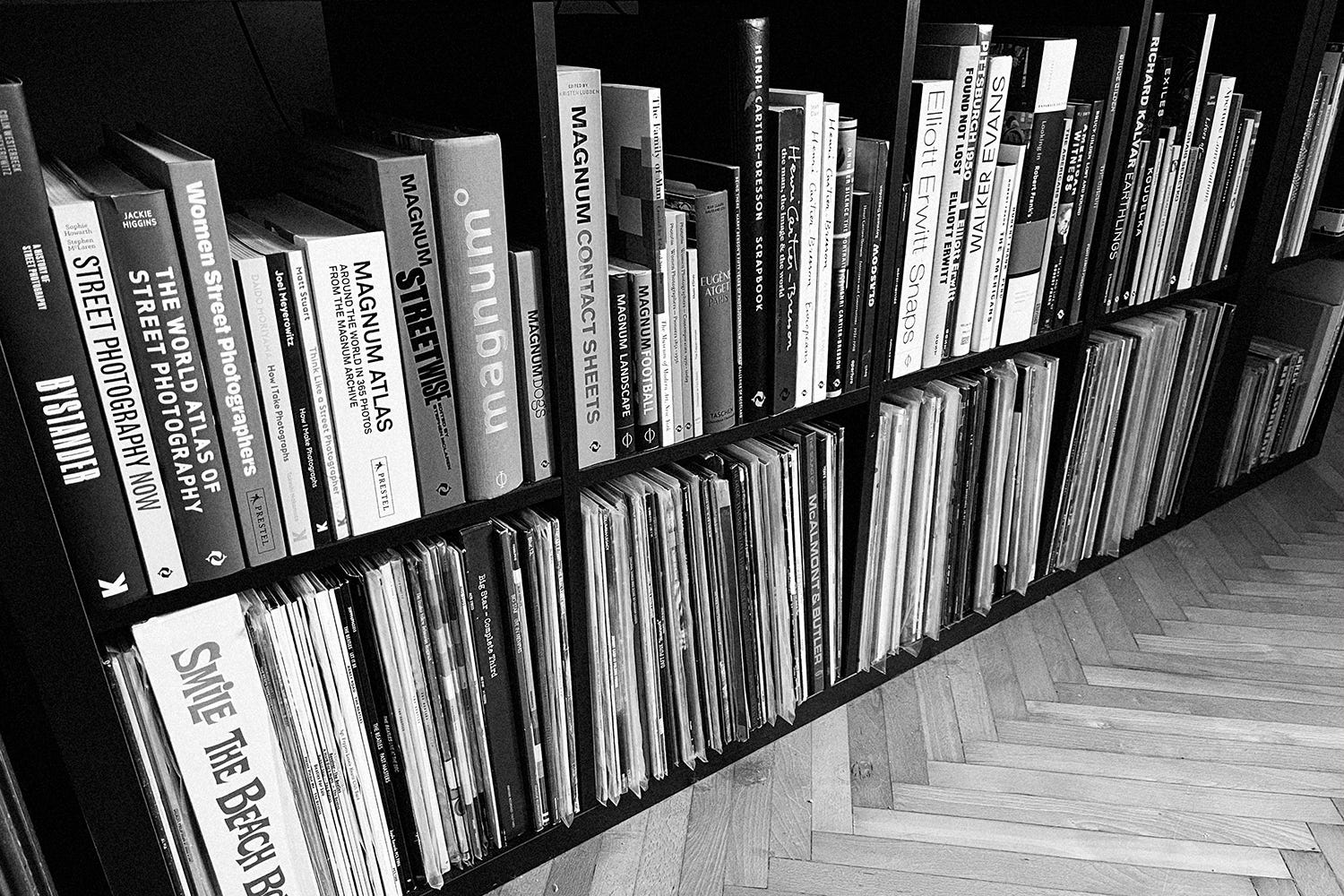
Sitting across my room sits a small, though ever-expanding, library of books containing tens of thousands of photographs. Each book represents an artwork in and of itself with love and care poured in to its cover, its sequence, its layout, its creation. In short, a photo book is a beautiful thing, not there only to be gazed upon, part of a collection, but crying out to be read, to be studied. As photographers, these books are indispensable in honing our craft.
As a songwriter might study the albums and songs of Jimmy Webb, Brian Wilson, or the late Burt Bacharach, street photographers should critically analyse the photographs in books by Cartier-Bresson, Garry Winogrand, or Robert Frank. Doing so helps us to learn and improve as photographers, while growing our understanding of the craft and broadening our appreciation of our chosen art form.
The Many Categories of Photo Books
There are many categories and subcategories of photography books. There are essential practical guides (my own first steps were taken with Bryan Peterson’s excellent Understanding Exposure); books on theory or the philosophy of photography (for instance, Susan Sontag’s On Photography – required reading!); and biographies or critical analyses that place a photographer’s life and work in context.
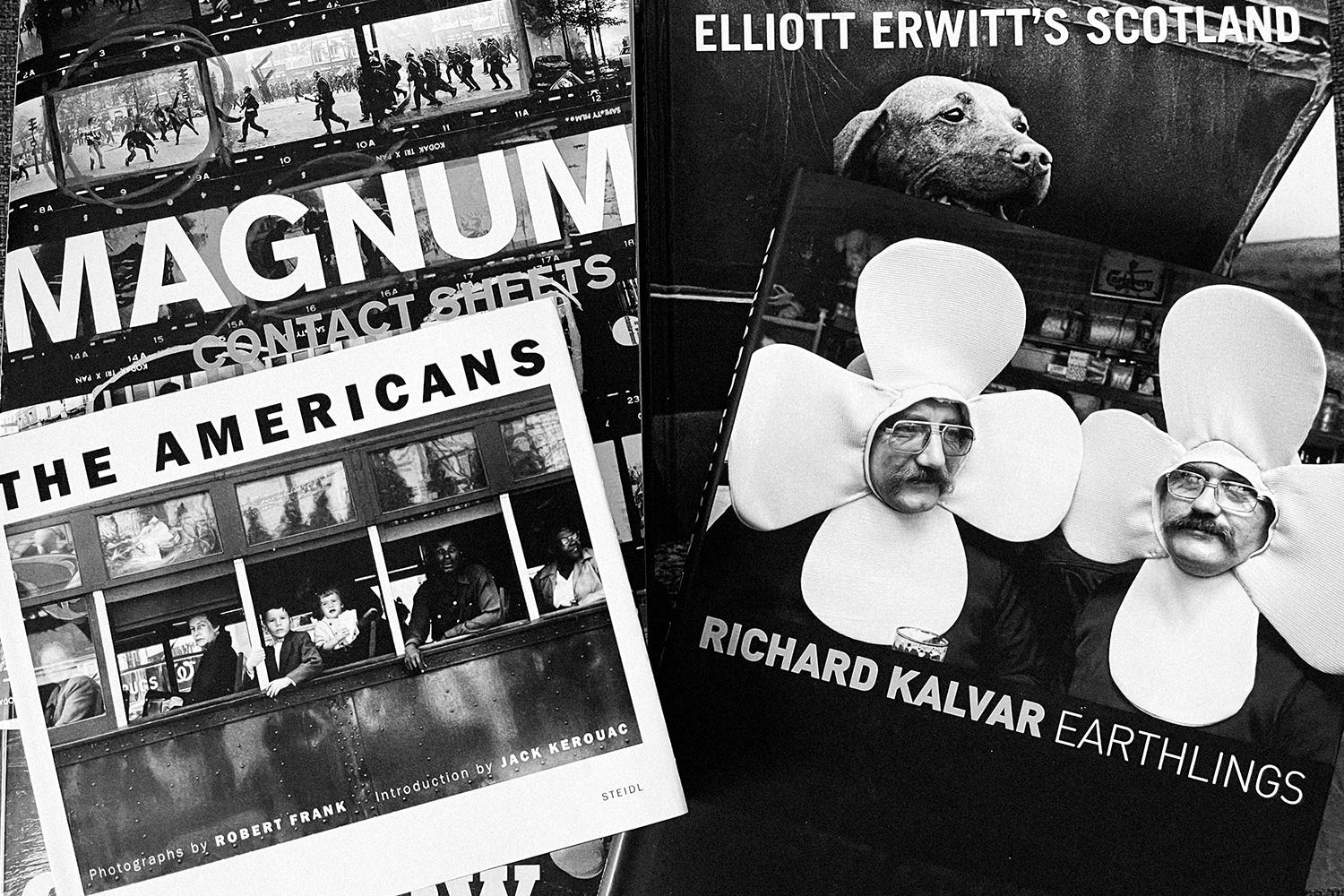
In this issue, however, I want to focus on collections of photographs. Monographs, such as Robert Frank’s The Americans, or Richard Kalvar’s Earthlings; retrospectives, such as collections of the photographs of Cartier-Bresson and Walker Evans, or the bite-sized Photofile series; and compilations such as the indispensable Magnum Contact Sheets or the often maligned but no-less important Family of Man.
Why We Should Read Photo Books
It’s easy to get lost in our own work and at times, if stuck in a rut, difficult to find the next step. Thorough exploration of the pages of a photography book can assist in finding the right path. When feeling adrift, studying other photographers’ work can provide inspiration, it can be the catalyst for a new creative spark. Though when fuelled by such inspiration, be careful not to slip into unintentional imitation.
Studying both contemporary books and the classics, we can see how the past has shaped the present and how, for instance, the work of Elliott Erwitt has informed the photography of Craig Semetko. Or how comparing work from the early New York school of street photographers to the output of Boogie can show how street photography has evolved.
Being self-taught, I sometimes struggle with impostor syndrome, so I must remind myself not to be discouraged by the mastery of the photos adorning these pages, and instead see them as a wealth of information to help me grow. Books such as Magnum’s Contact Sheets or the contact sheets of Robert Frank found in the expanded edition of Looking In: Robert Frank’s Americans are invaluable. They show frame-by-frame how an idea developed, dispelling the myth that the masters were successful first time, every time.
In photo books, we find answers. Why do our photographs not match our expectations? By deconstructing the work of Richard Kalvar or Robert Frank, for instance, we may consider how they might have approached a similar scene, then infer how we should do so in the future. Taking this a step further, studying the work of the masters helps us to build our own personal photographic vocabulary.
How To Read Photo Books
So how to read a photo book critically and analytically? This, of course, depends on what we want to gain from our reading, and could be the subject of a book all of its own. Let’s say we want to improve our technique, learning from the style of a photographer. We might study their use of composition, of lighting, or their choice of depth of field. We might reflect on their choice of subjects and the places where they were found.
Critical evaluation is important and we may ask ourselves why each image is effective on its own. First impressions are revealing so take note of photographs that catch the eye. Why does the image appeal to us? Question how the photographer made the image, and why they did. Are there concepts in the photograph that we might incorporate or allow to inspire us in our own work?
Photographers and editors will toil over the sequence of a photo book to ensure it works, whether narratively or thematically. Does the sequencing work for us? How are the photographs captioned? What does it tell us of the intention of the photographer? Many photo books have introductions, prefaces, or even essays set before the photographic plates. These shouldn’t be overlooked as they may indicate concepts, themes, or offer context to the photographs.
Afterward, whatever we hoped to learn, consider the book in its entirety. How does the work make us feel? Has it effectively conveyed its thematic or artistic intention? Then start again, this time with a clearer understanding of the work.
Buy Books Not Gear
Please forgive a well-worn cliche, if you want to improve your street photography, buy books not gear. Avoid the evil imperia, and buy from your local photo book store. Yes, books are lovely to own and even more enjoyable to gaze at from across the room but don’t just collect them, ingest them. Set aside time every day – or every week – to sit with a book and really study it.
What do you think? Which photo books have improved your photography? Which are your favourites? Any recommendations? Let me know in the comments.
And finally…
If you’ve enjoyed this issue, I’d be very grateful if you could recommend it to any photography-loving friends.
This newsletter is free to read, however, as a freelancer in the creative arts, every penny counts. If you like what I do, please consider buying me a roll of film. You can do so by clicking here, or by aiming your camera at the QR code below. Your donations help me keep making photographs and writing.

All labour required to publish The Contact Sheet is undertaken by me alone. As I try to be a better socialist, I donate 10% of all income to anti-capitalist, leftist, or progressive causes or organisations that help make the world a better place. Thank you!